Return to main Vanishing B.C. page Return to home page
Page last updated January 22, 2011
© Michael Kluckner
|
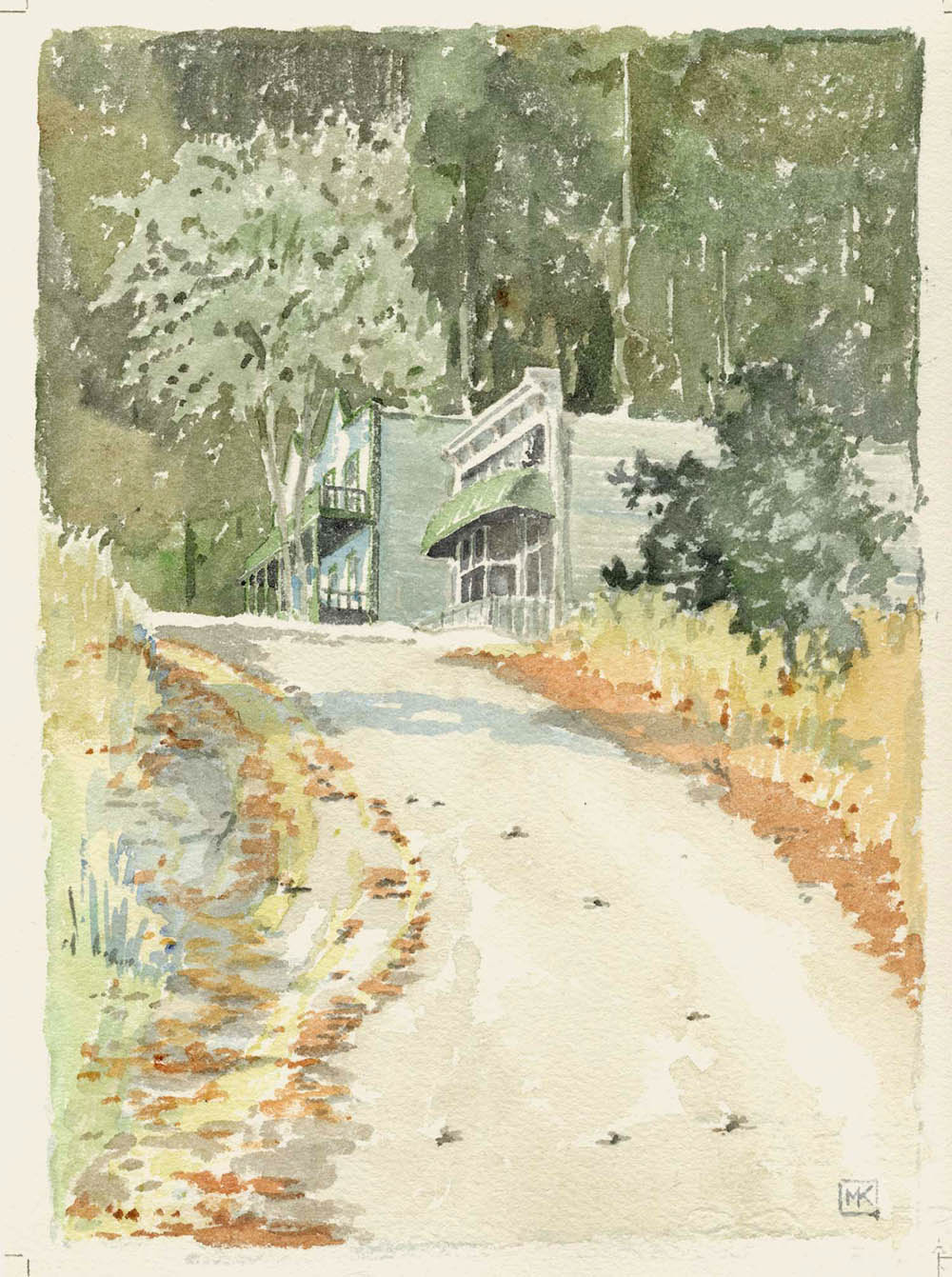
The historic buildings of Ainsworth Hot Springs, as they appeared (in 2003) from the roadway leading up from the lakeshore and old wharf site – the first view of the townsite for people hiking up from the sternwheelers many years ago before the highway between Balfour and Kaslo opened. Mining and fruit-growing communities, linked to the railheads by sternwheelers, dotted the rugged shores of Kootenay, Slocan and the Arrow Lakes. In the long run, it was the Bluebell Mine at Riondel, across the lake from "Hot Springs Camp," which supported the local economy. Staked in 1882 by Thomas Sproule, the claim was "jumped" by Thomas Hammill, an employee of San Francisco promoter Captain George Ainsworth. Ainsworth developed the townsite at the hot springs on the west side of the lake, and developed it in the late 1880s into the Kootenays' largest community, a status it quickly lost when the Payne Claim at Sandon was discovered in 1891. A fire in 1896 wiped out the original town; the two surviving buildings illustrated here--the Silver Ledge Hotel and the J.B. Fletcher General Store--are both privately operated museums, eking out an existence through passersby and visitors to the hot springs resort nearby. The Silver Ledge Hotel, which had hot running water from the springs, closed in 1949 and began its conversion into a museum in 1964. Henry Giegerich of Montana built the store in 1896 to replace a log building; J.B. Fletcher managed and then owned it from 1912 until it closed in the 1970s.
|
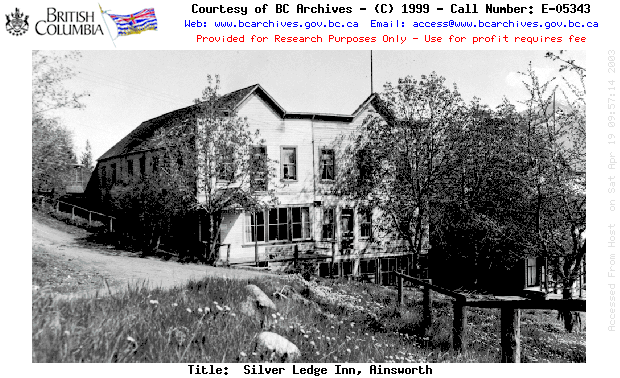
The hotel late in the 1940s, around the time it ceased operation. Photo by Lythgoe.
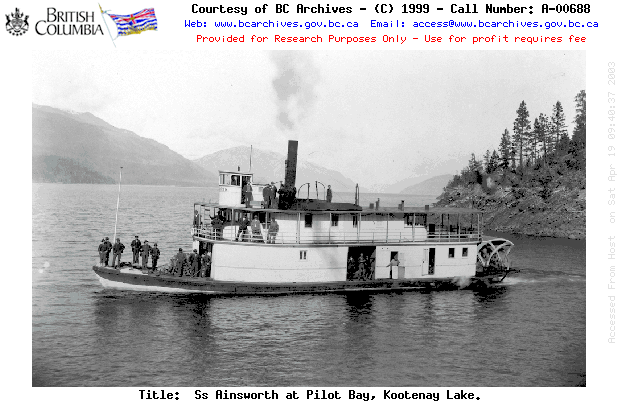
Photo by Elite Studios, Spokane, ca. 1894. The Pilot Bay Smelter was one of the Kootenay properties controlled byVancouver lumberman and industrialist John Hendry. Among the investors was BC Sugar Refinery owner B.T. Rogers, married to the niece of CPRdirector and Bank of Montreal president R.B. Angus (there's a small irony here, as the CPR was engaged in a bitter commercial war with theGreat Northern Railway, whose British Columbia representative was John Hendry). Mrs. Rogers, then 26, and her 30-year-old husband Ben visitedPilot Bay in 1895, a trip recorded briefly in her diary. They travelled with their friend and fellow investor Herbert Holt first to Revelstokeon the CPR, then took the paddlewheeler "Lytton" down the Columbia River and the Arrow Lakes, stopping at Nakusp, Cariboo Creek andRobson, then waited two hours for the Great Northern train into Nelson, from which point they probably took the "Ainsworth" to see theirinvestment. Continuing on to Kaslo, they spent the night, then, "after breakfast, Mr. Holt, Ben and I started on three fiery steeds for '49Creek,' nine miles away by trail; took us nearly three hours to get there. Ben panned some dirt and got about three cents worth of colour."Two days later, they borrowed a handcar and pumped it nine miles down the Kaslo & Sandon line to a set of falls, where they caught sometrout and spent a pleasant day in the sun before pumping it all the way back again. [Source: M.I. Rogers, 1985, p. 44-5]
Just north of Ainsworth Hot Springs is Woodbury Resort & Marina, with a rambling lodge probably built in the 1920s or 1930s, during the lakeboat era. The people there on the day I visited were unable to provide me with any more detailed information, or any old photos--does anyone have this info?
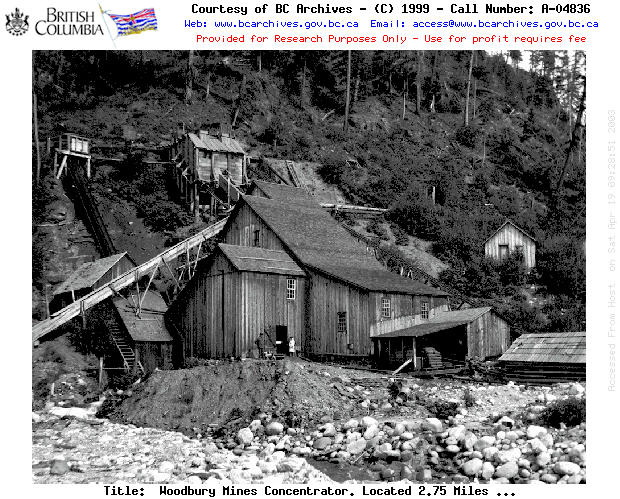
An 1898 photograph, by an undetermined photographer, of the Woodbury mine workings about 5 km. north of Ainsworth Hot Springs
Note from Elizabeth Oughtred, 2010: I am one of the great grand daughters of the McKinnon family . My father'smother's mother was the McKinnon and my grandmother grew up there, also my father until his early teens.