Return to Provence February 2026 |
 A Little of West Australia & Sydney October-November, 2025 |
 A Little of Fiji en route to Australia February-March, 2025 |
 Montréal and Québec 2024, with a look back to 1997 |
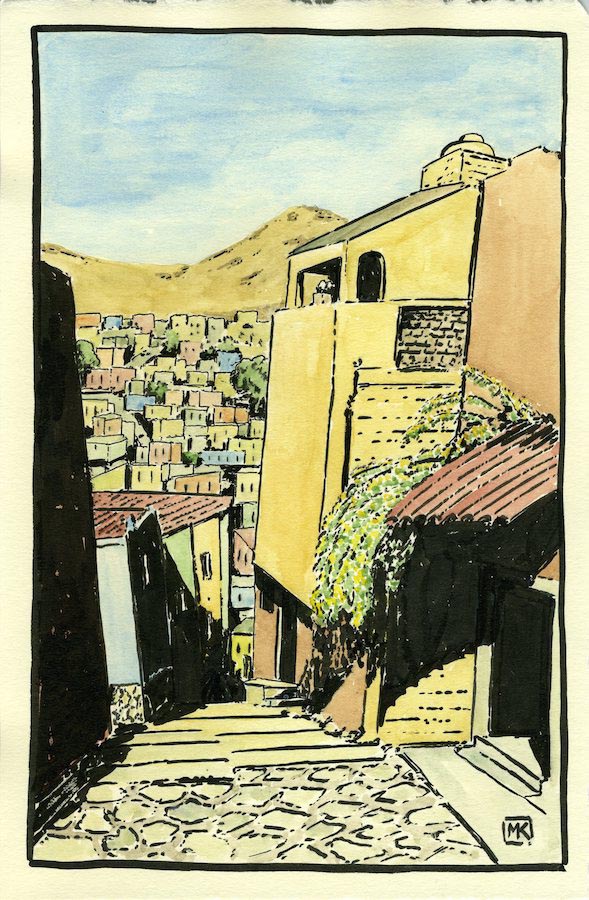 Back to Mexico 2024 |
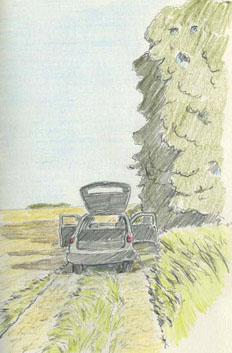 Holland & Northern France 2023 |
 Mayne Island 2021 & 2023 |
 Cyclone-dodging in New Zealand, plus more Sydney, Australia January-February 2023 |
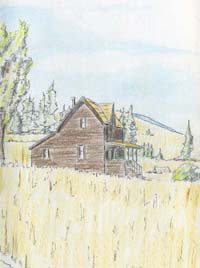 The year's meager sketchbook 2022 |
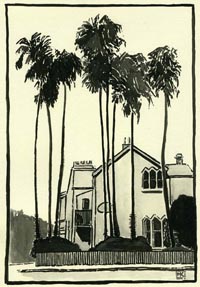 A month in Sydney during COVID 2021-2022 |
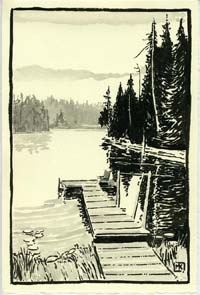 Short trips in BC during COVID 2020-2021 |
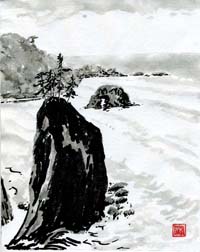 Japan 2019 |
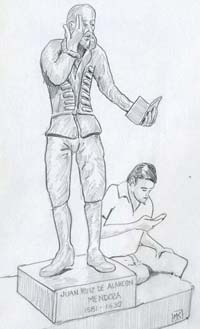 Oaxaca, etc. (Back to Mexico) 2019 |
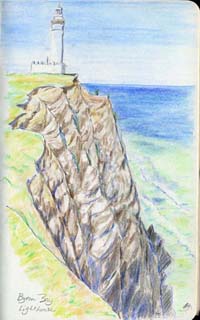 Trips in 2018 to the Kootenays, Banff & Australia 2018 |
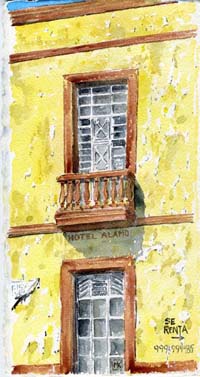 Mérida & The Yucatan 2018 |
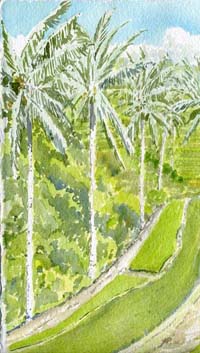 Indonesia 2017 |
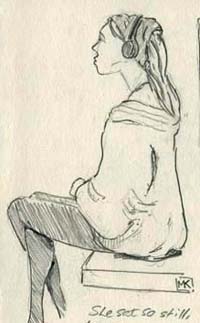 San Francisco Briefly May 2017 |
 Peru 2017 |
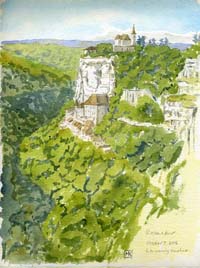 Corrèze, Auvergne, Lot, Lyon, & Paris 2016 (& 1990 &1986) |
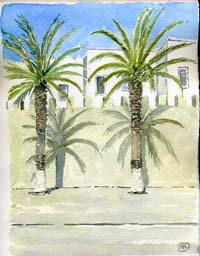 Morocco via Spain 2016 |
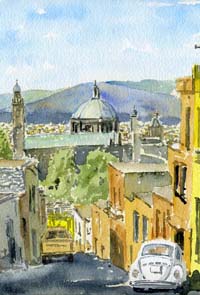 Mexico City, San Miguel de Allende & Guanajuato 2015 |
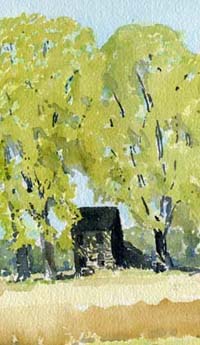 American Roadtrip #4 (Hermann Missouri & thereabouts) 2014 |
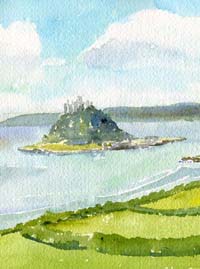 London Art Museums & bits of Cornwall & Wales 2014 |
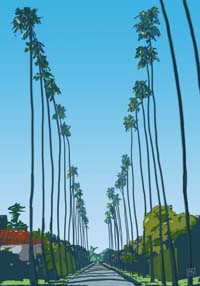 American Roadtrip #3 (Los Angeles and the Big Sur Coast) 2014 |
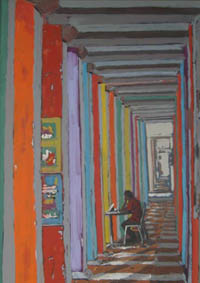 Malaysia & Singapore 2013 |
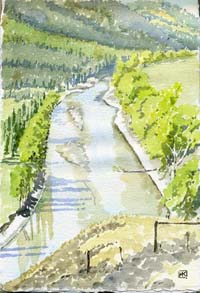 Summerland & other paradises 2013 |
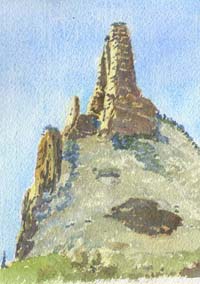 American Roadtrip #2 (Arizona, New Mexico, & Route 66) 2013 |
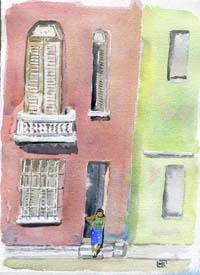 Cuba 2012 |
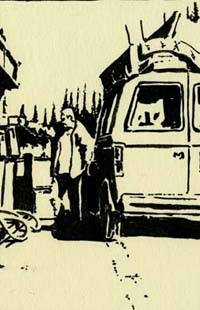 The Yukon 2012 (& 2000) |
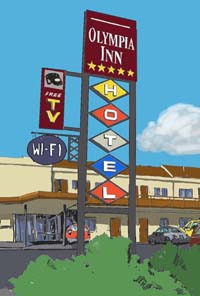 American Roadtrip #1 (Portland & Washington Coast) 2012 |
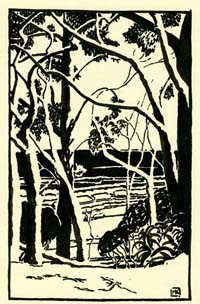 Australia via Taiwan 2012 |
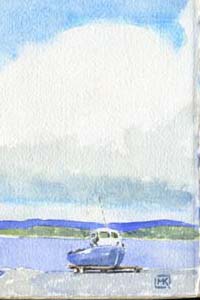 Percé encore 2011 |
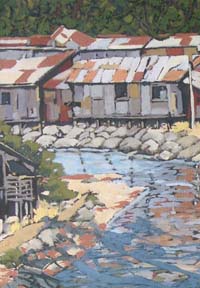 Costa Rica 2011 |
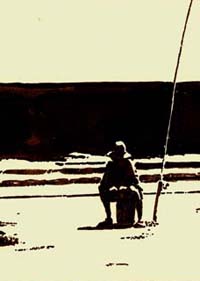 The Australian Campervan Trip 2009 |
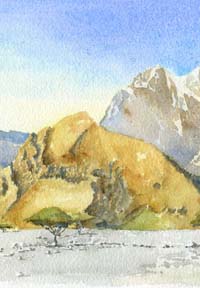 Ras-al-Khaimah, United Arab Emirates 2009 |
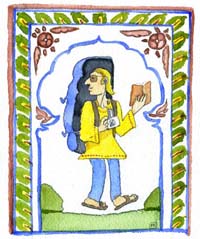 Rajasthan 2009 |
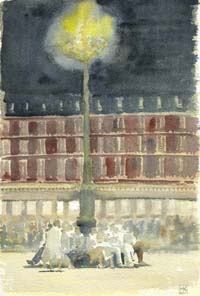 Spain & France 2008 |
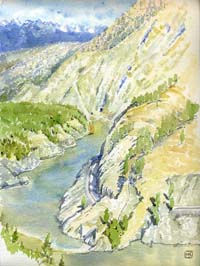 Desert to coast: British Columbia's Thompson & Fraser Rivers 2008 |
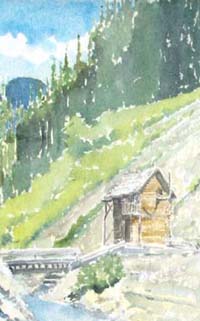 Wells & the Cariboo, British Columbia 2006 & 2007 |
|
landmarks near Vancouver Summer, 2006 |
 Heidelberg (a coda to Turkey-Greece) November, 2005 |
2005 |
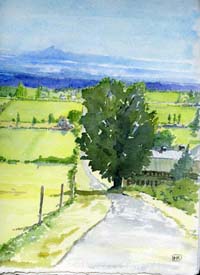
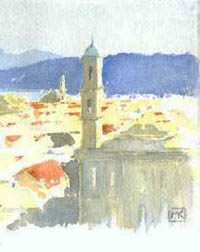
|
June, 2004 |
 |
 Italy 2004 |
 Percé Seminar & sketches July, 2003 |
Pen & ink February, 2003 |
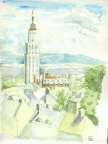 Québec 2001 & 2002 |

 Sketchbook 2001-2002 |
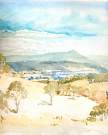 by Beetle February, 2000 |
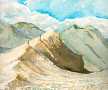 British Columbia Interior Summer of 1999 |
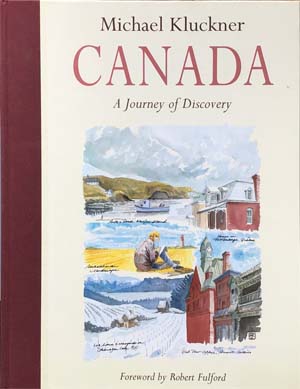 A Journey of Discovery sketchbook 1996-1998 |
 Mediterranean 1992-1993 |
 1986: the first real art trip to Amsterdam and France |
|
Written in 2005: this part of my art has developed very separately from the studio oils of BC and Australia. It relates much more to the watercolours I did as illustrations for books like Canada A Journey of Discovery and Vanishing British Columbia. It's all about the pleasure of travelling and recording the landscape I pass through, where the sketchbook (and/or a web-published or book-published image) is the "final use," by which I mean I'm not daubing away merrily with the intention of gathering images for later transposition into larger studio paintings. While still in my teens, I was inspired by the sumi-e (brush and ink) sketchbooks of the Japanese master Hokusai. At the age of 20, I visited the Louvre and was intrigued by Eugène Delacroix's watercolour sketchbooks from his trip through Morocco in 1832. Ever since I have carried a sketchbook while travelling. One problem to overcome was the poor quality of the paper in
commercial watercolour sketchbooks. The first time I tried to
use a commercial watercolour sketchbook was on a trip through
France in 1986. The experiment worked poorly, at least in part
because of a second problem – I had not developed the ability to
simplify the images and record them in a way that allowed me to
finish them effectively from memory. Learning to paint these
"pôchades" took more years of practice.
October, 1986 |

|
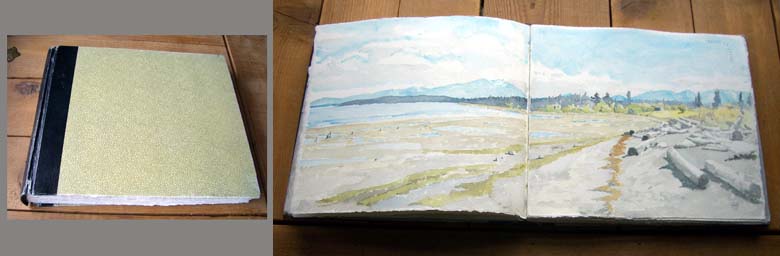
A 2005 sketchbook, with the beginnings of a double-page watercolour of the beach at Denman Island, BC
This little paintbox and the single brush is actually a real
nuisance, requiring a looser, wet-into-wet technique than I
perhaps might otherwise use; the resulting pictures reflect the
truism that watercolour is the interplay of water and chance.
With a lot of them, I block in background colours and shadows
and finish them at home with a bigger paintbox (same colours)
and sable brushes where I can control the wetness of the paper
and get some texture into brushstrokes. During July, 2003, I travelled to Percé in the Gaspésie, at the extreme eastern end of Québec on the Gulf of St. Lawrence, to give a seminar on travel painting in watercolours and creating sketchbooks (carnets de voyage et aquarelles) for the Université Laval's International Summer School. The page on Percé has the results and on a linked page the sketches from return visits in 2004 and 2005. In 2006 and 2007 I gave the same course at the Island Mountain Arts Centre in Wells, BC. I formalized the course for 2011 in Percé and at Susan Gorris's Art in the Country in Langley, BC, as "The Grammar of Space," spending a lot more time on the structure of pictorial space and different ways of representing it. Around 2004, largely due to the difficulties of painting in European cities, I modified my technique and began to use small annotated pencil sketches as the on-site "plein air" image, then painted as soon as possible after that – often in a hotel room – while the colour memory was still fresh in my mind. You can see some of these on the Turkey-Greece page. Pencil drawings of people became one of my major activities in 2008 during the Spain-France trip. I began using chiaroscuro (brush and ink) drawings as a travel medium extensively in Australia. Typically, I use a mix of the techniques now, and sometimes go back to images and paint them as oils afterward, as I did for the Costa Rica trip. No way am I about to start lugging oil paints around on trips – that's for younger/stronger/braver people who like to paint alla prima and don't mind checked baggage. *** I contributed to a Travel Painting blog, now defunct, at greggfretheim.blogspot.com/ *** In 2008, I had a lengthy correspondence with Dutch art student
Siri Hol. Read
the conversation. Update 2013: I find I'm spending almost all my travelling 'art time' drawing with pencil in a Moleskine 8 1/4 x 5 1/4 inch (21 x 13 cm) sketchbook, mainly because I'm most interested in drawing people now. But I do work up some of the landscapy bits later into oils (or digital paintings, using a Wacom Bamboo tablet, intermittently since the Portland trip in 2012). I still get some good watercolour time and results if we're travelling in a car, such as the Arizona-New Mexico trip that was all about landscape. But the pencil sketchbook is very satisfying, and I can work on it anywhere – hotel room with bad light, bar stool, a few minutes caught here and there anywhere. Everybody who is honest about travelling admits how boring it sometimes is, with too much time to kill away from the familiar routines of home, and a bit of scribbling in the sketchbook does for me what a cryptic crossword does for my Christine or a novel does for other people. It's also about the weight of luggage – when we're travelling like we did in Malaysia with just small carry bags, I try to keep mine below about 6 kilos/14 pounds, difficult to do with both an iPad (2 lbs.) and a watercolour sketchbook with the small paintbox (2 lbs.). As I get older, everything (even the electronics) has to get lighter. Update about luggage, 2019: art supplies are limited to a Moleskine sketchbook, a small box of coloured pencils (see below) and a small cellphone. Total weight of my bag is about 9 pounds or 4 kilos. Old-age mobility! ...update 2018: a friend gave me some coloured pencils ... 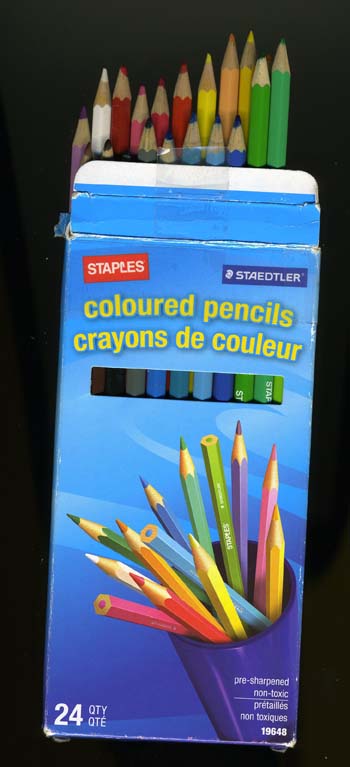 ... after I complained about not having any
coloured medium with me for the pink flamingos in the Yucatan
when I was there with just the Moleskine 8 1/4 x 5 1/4 inch
(21 x 13 cm) sketchbook and a black pencil. They're okay – I
feel like a little kid colouring-in with a handful of pencils
– although they certainly don't give the beautiful surface and
saturation of watercolour on proper paper. The page of trips
in 2018 has the first set of results. The result is an
odd combination of outlines and colouring-in – not entirely
satisfactory but worth exploring.
Their main advantage is they're dry and light, require no set-up and no take-down – I'm travelling super-light now with a bag that's about 5 kilos containing clothes and everything else for a month or so. Update 2019: I've given up on the coloured pencils for the time being. For the Japan trip, I took just traditional Japanese ink and paper and described them on this page, a look at Japanese aesthetics and art media. Update 2020: I reproduced a number of travel images from all over the world in my book Here & Gone. 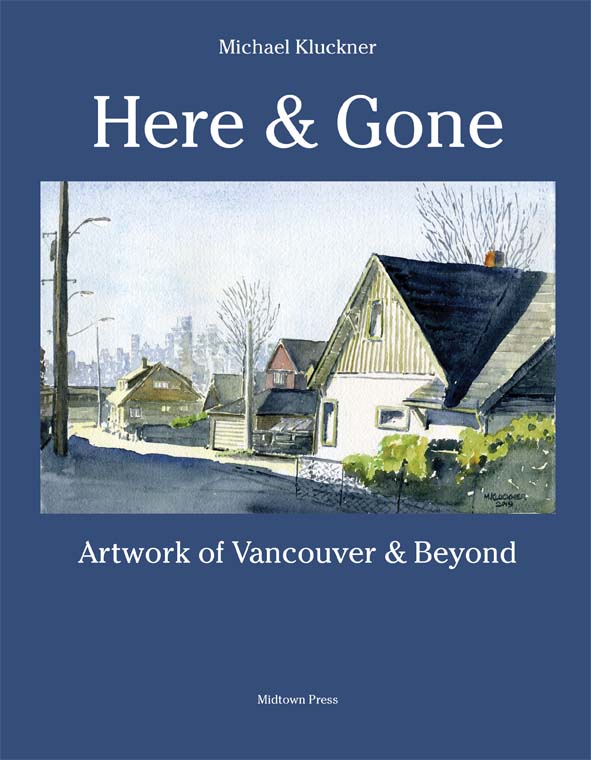 Update 2022: I'm increasingly uninterested in painting watercolours when I travel (although I would probably enjoy it if we returned to a landscapy place like France, such as the 2016 trip). But I've gone back just a little to the coloured pencils in 2022... Probably will just carry the Moleskine sketchbook from now on. Update 2023: I took just the Moleskine sketchbook to New Zealand, and carried along a set of Spanish acuarelable pencils my friend Penny found in a local "share box." 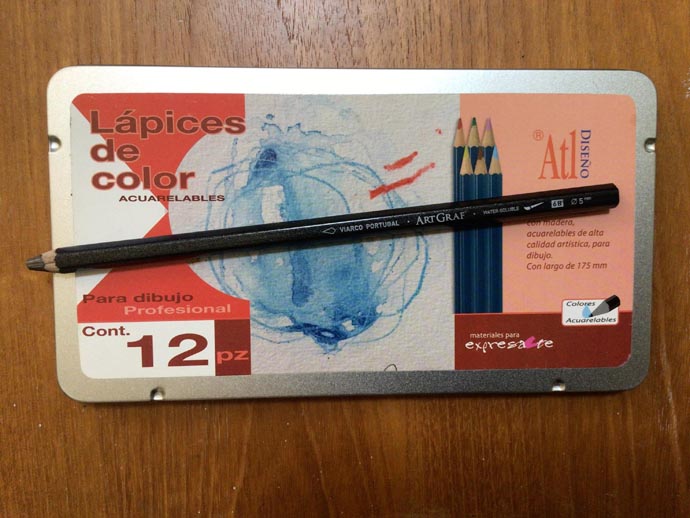 You can get a fairly acceptable wash
effect with them, with a brush and a little water, but the
problem is the dampness ripples the sketchbook pages,
which are meant for dry media. So I scribbled away with
them dry, and bought a very fat Portuguese #6
water-soluble pencil at a shop in Auckland to add depth of
tone into what I was doing. You can see the results on
that trip page.
Later in 2023: Still the small pencil sketchbook, with a selection of pencils from the two boxes above. Gotta keep my travel bag under 5 kg! Getting old, and don't have the same ambition I once did when travelling, like this classic trip... |
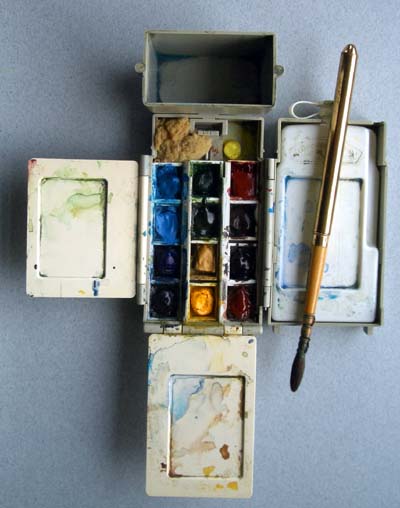 My
travel paintbox colours (14 of them): cerulean blue, manganese
blue, ultramarine light, Payne's grey, cadmium yellow (a little
blob of it), cadmium yellow deep, yellow ochre, olive green,
viridian, burnt sienna, burnt umber, sepia and Indian red + rose
madder sharing a single tub. When I moved to Australia in 2006,
I replaced the manganese blue with cobalt blue but soon went
back to the manganese to get a brighter sky colour.
My
travel paintbox colours (14 of them): cerulean blue, manganese
blue, ultramarine light, Payne's grey, cadmium yellow (a little
blob of it), cadmium yellow deep, yellow ochre, olive green,
viridian, burnt sienna, burnt umber, sepia and Indian red + rose
madder sharing a single tub. When I moved to Australia in 2006,
I replaced the manganese blue with cobalt blue but soon went
back to the manganese to get a brighter sky colour.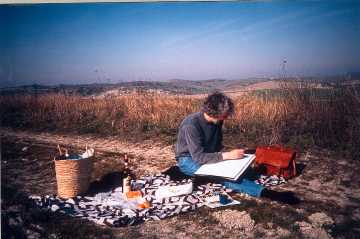
Painting with a good chianti at hand near Pienza, Italy, February 1993